Molecular Therapy Family of Journals
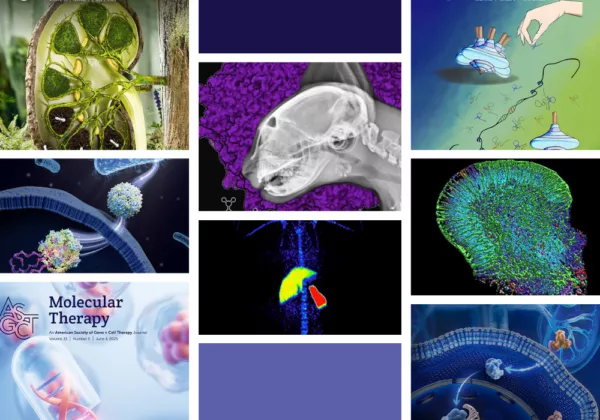
ASGCT's Molecular Therapy family of journals is the authoritative source for impactful, peer-reviewed research advancing the field.
Meet the Journals
ASGCT is proud to be the scientific home of the world's leading publications in the field of gene and cell therapy. Explore our family of journals to stay at the forefront of discovery and innovation.
Molecular Therapy
Molecular Therapy (MT) is dedicated to publishing important peer-reviewed research and cutting-edge reviews and commentaries promoting genetics, medicine, and biotechnology.
Molecular Therapy Advances
Molecular Therapy Advances (MTA), formerly Molecular Therapy Methods & Clinical Development, focuses on advances in cell and gene therapy and is dedicated to elevating the most impactful work and serving as a home for both established leaders and emerging voices shaping the future of CGT.
Molecular Therapy Nucleic Acids
Molecular Therapy Nucleic Acids (MTNA) publishes top-quality basic, translational, and clinical research in the broad fields of nucleic acid-based therapeutics to treat and/or correct genetic and acquired disease.
Molecular Therapy Oncology
Molecular Therapy Oncology (MTO) focuses on the development and testing of cancer therapies in pre-clinical and clinical settings, and provides a unique forum for work in the burgeoning fields of biologic cancer therapies, including viral, bacterial, cellular, and gene therapy.

Dive Deeper
Want to explore the latest research and discussions in gene and cell therapy? Go beyond the pages of our journals with the Molecular Therapy Podcast and our Molecular Therapy Presents webinar series.
Claim Your Subscription
ASGCT members receive online subscriptions to the Molecular Therapy journals to stay up to date on the latest research in the field. Here's how to claim your subscription:
- Sign in to your ASGCT account.
- From the My ASGCT tab, click the Molecular Therapy tile.
- If needed, click "Allow Access."
Publish in Molecular Therapy
Choose ASGCT's field-leading family of journals to share your work with the world. ASGCT members receive significant discounts on per-page publishing and open access fees.
-
Molecular Therapy is the leading journal for research in the areas of gene transfer, vector development and design, stem cell manipulation, development of gene-, peptide-, protein-, oligonucleotide-, and cell-based therapeutics to correct genetic and acquired diseases, vaccine development, pre-clinical target validation, safety/efficacy studies, and clinical trials. Molecular Therapy is dedicated to promoting the sciences in genetics, medicine, and biotechnology. Publishing important peer-reviewed research and cutting-edge reviews and commentaries, the journal continues to attract the best material in the field.
ASGCT members save $52 per page ($64 vs. $116 per page for the first eight pages; $128 vs. $180 per page for each additional page) and $900 on open access fees.
-
Molecular Therapy Oncology is an international, online-only, open-access journal focusing on the development and testing of cancer therapies in pre-clinical and clinical settings. While providing a unique forum for work in the burgeoning fields of biologic cancer therapies including viral, bacterial, cellular, and gene therapy, the journal will consider all top-quality, cutting-edge research that employs innovative approaches to cancer treatment. The scope also encompasses the identification and validation of predictive biomarkers of response. Because the journal is focused on cancer therapies, most accepted papers will have translational relevance.
ASGCT members save $700 on open access fees.
-
Molecular Therapy Advances is an international, open-access journal publishing important peer-reviewed methods and procedures as well as translational advances in the broad array of fields under the Molecular Therapy umbrella. Focus areas are advances in cell and gene therapy and how they are translated and applied in the clinical setting. Novel methods of gene delivery into immune cells and hematopoietic and other stem cells using integrating, non- integrating vectors, non-viral vectors, and gene editing methods are featured, manufacturing of such products under Good Manufacturing Practice (GMP) conditions, including regulatory science and possible commercialization of these novel products are additional focus areas.
Topics of particular interest within the journal's scope include:
- Early-phase clinical trials that investigate a novel biological product with a novel mechanism of action
- Systematic reviews and meta-analyses of gene and cell therapies in preclinical and clinical development stages and in different indications
- Translational and clinical scale-up and Good Manufacturing practice procedures and process development
- Post-marketing observational studies to investigate long-term safety and efficacy of gene and cell therapies
- Clinical trial protocols of gene and cell therapies, combined medical devices, and other biological products
- Studies focusing on regulatory science and analyzing the regulatory approval process
- Methods for cell isolation, engineering, culture, expansion, and transplantation
- Cell processing, storage, and banking for therapeutic application
- Quality Control (QC) assay development
- IND-enabled preclinical studies comprising preclinical pharmacology, toxicology, metabolism, and bio distribution
- Pharmacology/toxicology studies of new and next-generation vectors
- Methods for gene and cell vector delivery
- Methods for targeted genome editing and engineering
- Methods and technology development for cell reprogramming and directed differentiation of pluripotent cells
- Development of biomaterials and nanoparticles for applications in gene and cell therapy and regenerative medicine
- Computational and bioinformatic methods for analysis, modeling, or visualization of biological data
ASGCT members save $700 on open access fees.
-
Molecular Therapy Nucleic Acids is an international, open-access journal publishing top-quality basic, translational, and clinical research in the broad fields of nucleic-acid-based therapeutics to treat and/or correct genetic and acquired disease. As an official journal of the American Society of Gene & Cell Therapy, Molecular Therapy Nucleic Acids builds upon the success of Molecular Therapy in publishing important peer-reviewed research, cutting-edge reviews, and commentaries targeted to advances in gene- and oligonucleotide-based therapies.
Subject areas include but are not limited to: development of therapeutics based on nucleic acids and their derivatives, vector development and design for the delivery of RNA-based therapeutics, applications of gene-modifying agents including triplex-forming oligonucleotides and enzymes such as Zn finger nucleases, pre-clinical target validation, safety/efficacy studies, and clinical trials.
To accommodate the rapid growth of Molecular Therapy Nucleic Acids, starting in 2022, articles will be submitted and published in one of six subsections covering key topics. Subsections include:
Subsection Topics Covered Guidelines Bioinformatics - AI
- NGS
- Mathematical modeling
- Phylogenetic oligo arrays
- Manuscripts presenting new software, algorithms, databases, web servers, or web services must clearly demonstrate the validity of these tools in proof-of-principle experiments or analyses; authors should also describe how these tools improve upon current approaches.
- New software, algorithms, databases, web servers, or web services must be open access, with a direct link to the host site or database provided within the main text of the manuscript.
- Novel software and source code must be provided in a version-controlled repository, such as GitHub or GitLab.
Delivery strategies - Chemistry
- Ligands
- Lipid nanoparticles
- Localized delivery applications
- Polymeric nanoparticles
- Systemic delivery
- Targeted delivery
- Viral vectors
- Studies can cover the broad field of targeting and clinical applications. Examples include different routes of delivery (e.g., localized, systemic, subcutaneous, intrathecal), targeted vs. non-targeted delivery applications, lipid nanoparticles (LNPs), polymeric nanoparticles (PNPs), viral vectors, and chemistries.
- For targeted delivery approaches, there should be a clear demonstration of specificity with the inclusion of at least one negative control or control cell line.
- For nanoparticle-based approaches, the composition of the particle must be provided.
- Studies must include comprehensive data on the functional efficacy of the proposed strategy.
- Efficacy studies should be performed in at least two in vitro systems.
- Validation of the delivery approach in vivo is preferred but not required.
Non-coding RNAs - circRNAs
- lncRNAs
- miRNAs
- siRNAs
- Regulatory guidelines
- Studies should pioneer innovative research into non-coding RNAs involved in disease, potential therapeutic interventions targeting these disease elements, or using novel non-coding RNAs for treatment.
- Validation of the non-coding RNA should be robust and highly reproducible with compelling data supporting the molecular effects in the disease, which may include overexpression and silencing studies, binding interactions with molecular targets, deletion of the target site, or functional rescue, with data supporting significant downstream effects. Relevant controls should be included pertaining to the specific non-coding RNA under investigation, e.g., miRNA studies should have scrambled or non-target controls for experiments.
- Therapeutic interventions targeting non-coding RNAs should be validated in relevant disease models.
- The functional relevance of the non-coding RNA in disease must be established. Experimental data demonstrating that the perturbation of the non-coding RNA can augment the disease state should be present or at least a clear rationale described for therapeutic invention for a novel non-coding RNA.
- Top candidate non-coding RNAs identified with bioinformatic approaches must be extensively validated experimentally. Purely computational or bioinformatic approaches for non-coding RNAs should be submitted to the Bioinformatics section.
- Studies pertaining to the mechanisms of action and applications of synthetic oligonucleotides should be submitted to other sections.
Oligonucleotides: diagnostics and biosensors - Aptamer-based biosensors
- Molecular beacons
- Nanostructured biosensors
- Radiolabeled oligonucleotides
- Rolling circle amplification-based biosensors
- Studies should present novel research in the broad field of molecular diagnostics and biosensors involving nucleic acids and their application in medicine.
- Studies involving aptamers must provide their sequences and equilibrium dissociation constants. Aptamer binding must be validated by at least two methods with appropriate controls.
- The target(s) of the aptamers should be identified.
- The specificity, sensitivity, accuracy, and working/dynamic range of assays must be clearly demonstrated and calculated.
Oligonucleotides: therapies and applications - Clinical studies
- CMC
- Development
- Discovery
- Preclinical assessment
- Regulatory RNAs
- The efficacy of the proposed strategy should be reproducibly demonstrated in at least two disease-specific cellular models in vitro. Confirmation in at least one animal model in vivo is preferred but not required.
- Studies should include positive/benchmark controls as well as negative controls. Matched, scrambled oligonucleotides with similar chemistry should be included in studies characterizing the impact of new chemistries on the efficacy and safety of oligonucleotides.
- Studies on new oligonucleotide therapeutic modalities should include safety assessments (including the potential immunotoxicity of such strategies) at least in vitro. Safety studies can include immune cell viability testing and cytokine profiling, e.g., high-density peripheral blood mononuclear cell cultures for human-related reagents.
- Studies based on immunomodulatory oligonucleotides should address the broad immune activity of oligonucleotide-based reagents, both positive and negative regulation of immune responses, with clear relevance to therapy of human diseases.
- Early-stage clinical studies and studies of new oligonucleotide therapeutic modalities should include an overall safety assessment of these reagents.
RNA/DNA editing - ADAR
- CRISPR
- HDR
- NHEJ
- TALEN
- ZFN
- Studies that integrate both biochemical and functional approaches are preferred.
- Studies that show the productive effects of editing must be confirmed in at least two independent experimental models.
- Approaches involving epigenetic mechanisms must address the specificity of the mechanism(s) involved.
- The specificity (potential off-target events) and efficiency of the RNA/DNA editing approach must be clearly demonstrated.
- For RNA editing, transcriptome-wide and bystander events should be assessed. For DNA editing, genome-wide off-target analysis should be performed.
ASGCT members save $700 on open access fees.
Submit to Molecular Therapy Nucleic Acids Join ASGCT to Save
Special Issue Calls for Papers
Molecular Therapy: The biological clock of aging and the possibility of lifespan extension
The special issue will explore aging results from the convergence of molecular damage with cellular consequences that propagate through tissue-level dysfunction and are modulated by systemic factors. Simultaneous intervention at multiple levels offers the greatest therapeutic potential.
Molecular Therapy Advances: Beyond prevalence: How rare diseases are reshaping therapeutic innovation
This special issue will bring together leading voices from across the spectrum of science, medicine, and policy to explore how cutting-edge innovation can be translated into meaningful impact for individuals living with rare diseases.
Inside Molecular Therapy: ASGCT’s Field Leading Journal Family
Join us as past ASGCT President Paula Cannon, Ph.D., and our Editors-in-Chief take you behind the scenes of ASGCT’s field-leading Molecular Therapy family of journals. Discover how these prestigious publications have shaped the landscape of cell and gene therapy research for the past 25 years.

Publishing Resources
Publishing 101
This presentation covers the journey from submission to publication in the Molecular Therapy family of journals.
Introduction to Scientific Research Integrity
This presentation proves an essential overview of how to avoid research misconduct.
More to Explore
Journal Family Home
Learn more about the aims and scope of the Molecular Therapy family of journals and how to submit your research.
Editorial Contacts
Contact the editors-in-chief of each journal as well as Cell Press communications and advertising staff here.
Special Issues and Collections
Explore our special issues and curated collections for in-depth research on the most impactful topics in gene and cell therapy.